SEE THE VIDEO OF THIS PRESENTATION ON THE PAX CHRISTI LITTLE ROCK YOUTUBE CHANNEL AND SUBSCRIBE!
 Pax Christi Little Rock
SEE THE VIDEO OF THIS PRESENTATION ON THE PAX CHRISTI LITTLE ROCK YOUTUBE CHANNEL AND SUBSCRIBE!

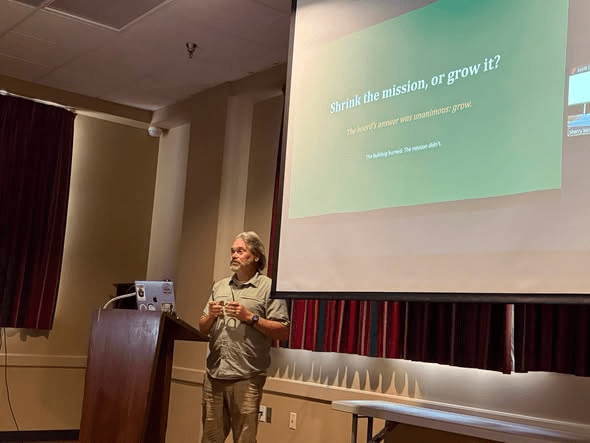
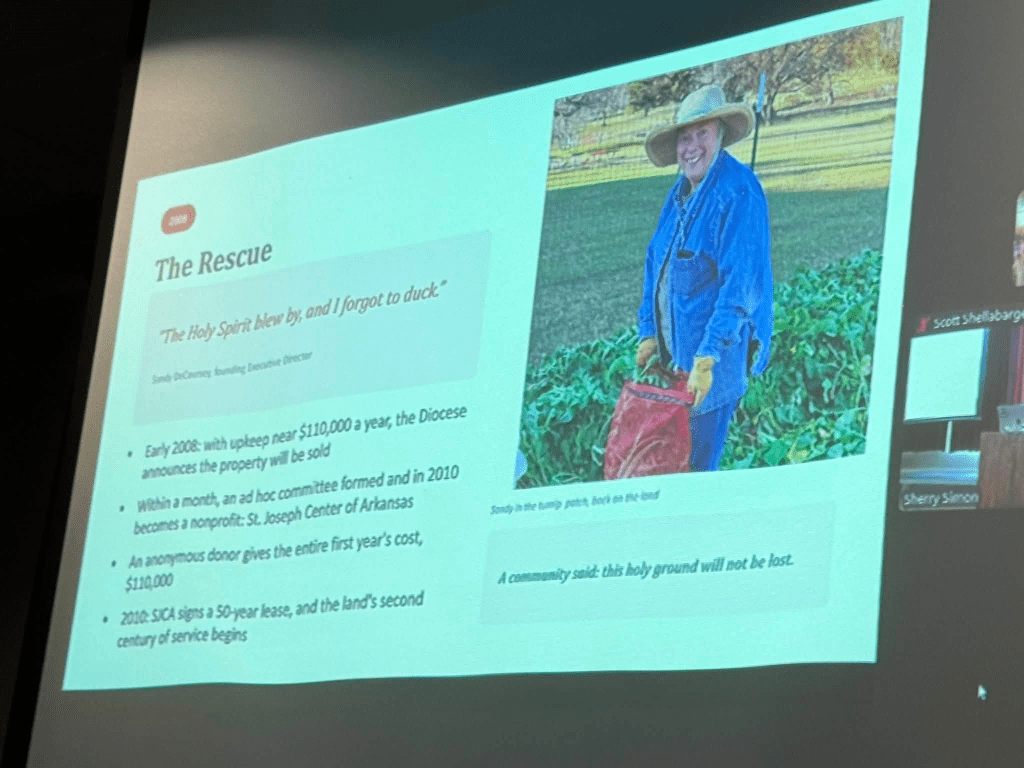
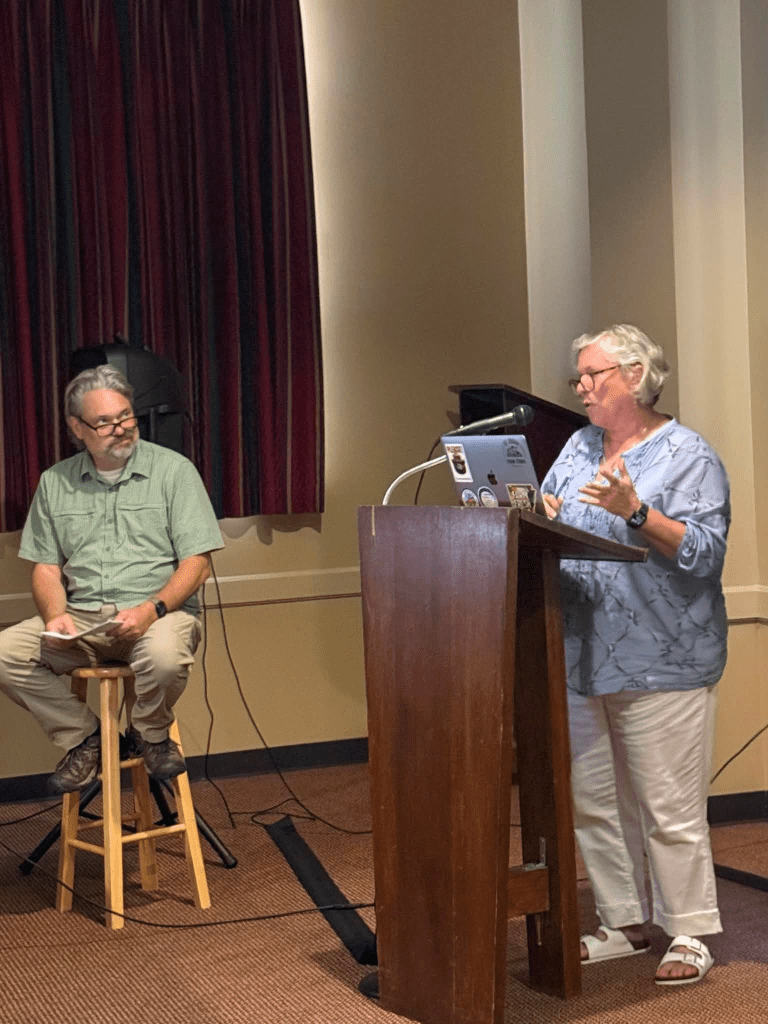
As part of the Pax Christi LR Speaker Series, Sandy DeCoursey and Scott Shellabarger, past and present Executive Directors of St. Joseph Center of Arkansas (SJCA), presented a wonderful program this evening detailing the history and projected future of SJCA as it literally rises from the ashes. You can view the slides included in the photos to obtain details about St Joseph’s, but the real story is the heart, faith, and love that drives the folks who believe in this mission.
They talked about community and how a healthy community is built on food security. Even as they await the building of their new storefront in Breckenridge Village, they are working with many local restaurants to buy their produce from local farmers. They are connecting farmer’s markets across Central Arkansas. They are planning a visionary agricultural/community garden development in Burn’s Park.
Please support SJCA by going to their website-stjosephcenter.org and donating today. Or you can join Pax Christi at their 10th Annual Lettuce Grow fundraiser on September 11. Use this link above to buy a ticket. See you there!

Earlier this month, I showed up at Helping Hand, a food and clothing pantry in Little Rock, to join in a food drive initiated by Arkansas Children’s Hospital and to be a part of a discussion on social justice with a group of young people from Youth Crossroads in Chicago who were visiting Arkansas to learn more about food insecurity. It was an amazing experience, in large part due to the people I got to know while I was there. One of these people was Genny Batcheller.
Genny is 17 years old and is going into her senior year at Central High School. She has been volunteering at Helping Hand for the past 4 years, working on the weekends during the school year and several days a week through the summer. Two years ago, Genny wanted to do something special for Gayle Priddy, the executive director who was retiring at the time. She found out that Helping Hand needed a new scale to weigh food as well as a new awning to go over their front door. So, Genny decided that she would work to raise money for these much-needed items. She spoke to a friend of her mother’s, Miss Valerie, who is a mentor for local artists. Valerie designed a beautiful image of two hands reaching out to one another, symbolic of the work being done at Helping Hand. Genny learned how to print this image on tote bags and began advertising that these bags would be gifted to people who made a $20 donation. Genny has already given out over 300 bags. It didn’t take long at all for her to raise the funds necessary to purchase the scale and the awning. In the process, Genny constructed a website for her fundraising called gennyink.com. where tote bags are still available.
In addition to taking classes at Central, Genny is also on the debate team and a member of the Little Rock Central High Young Lawyer Club. She hopes to become an attorney and go into the area of Public Policy. Genny
There are times when I become discouraged about the state of our world and the lack of concern shown for our fellow humans. Visiting Helping Hand and getting to know Genny Batcheller gave me hope. She is a beautiful example of the young people who are standing up and doing whatever necessary to make our world a better place. She understands that without justice for all, there can be no peace, so she is doing her part to reach out a helping hand to her neighbor. I hope we can all follow Genny’s lead and do one thing that makes a difference in the life of another person. Imagine what could be accomplished if we all carried out these small acts of love.
Sherry Simon
Presents
CEO, Arkansas Food Bank

by
Dr. Sherry Simon
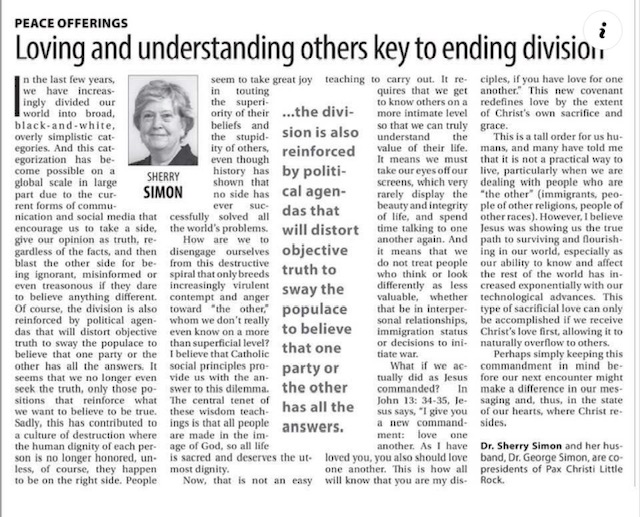
In the last few years, we have increasingly divided our world into broad, black and white, overly simplistic categories. And this categorization has become possible on a global scale in large part due to the current forms of communication and social media that encourage us to take a side, give our opinion as truth regardless of the facts, and then blast the other side for being ignorant, misinformed, or even treasonous if they dare to believe anything different. Of course, the division is also reinforced by political agendas that will distort objective truth to sway the populace to believe that one party or the other has all the answers. It seems that we no longer even seek the truth, only those positions that reinforce what we want to believe to be true. Sadly, this has contributed to a culture of destruction where the human dignity of each person is no longer honored, unless of course they happen to be on the right side. People seem to take great joy in touting the superiority of their beliefs and the stupidity of others, even though history has shown that no one side has ever successfully solved all the problems in the world.
How are we to disengage ourselves from this destructive spiral that only breeds increasingly virulent contempt and anger towards “the other,” who we don’t even really know on a more than superficial level? I believe that Catholic Social principles provide us with the answer to this dilemma. The central tenet inherent in these wisdom teachings is that ALL people are made in the image of God, so ALL life is sacred and deserves to be treated with the utmost dignity. Now, that is not an easy teaching to carry out. It requires that we get to know others on a more intimate level so that we can truly understand the value of their life. It means we must take our eyes off our screens, which very rarely display the beauty and integrity of life, and spend time talking to one another again. And it means that we do not treat people who think or look differently as less valuable, whether that be in interpersonal relationships, determination of immigration status, or decisions to initiate war.
What if we actually did as Jesus commanded? In John 13: 34-35, Jesus says, “I give you a new commandment: love one another. As I have loved you, you also should love one another. This is how all will know that you are my disciples, if you have love for one another.” This new covenant redefines love by the extent of Christ’s own sacrifice and grace. This is a tall order for us humans, and many have told me that it is not a practical way to live, particularly when we are dealing with people who are “the other” (immigrants, people of other religions, people of other races). However, I believe Jesus was showing us the true path to surviving and flourishing in our world, especially as our ability to know and affect the rest of the world has increased exponentially with our technological advances. This type of sacrificial love can only be accomplished if we receive Christ’s love first, allowing it to naturally overflow to others. Perhaps simply keeping this commandment in mind before our next encounter might make a difference in our messaging, and thus in the state of our heart, where Christ resides.

April 23, 2026
Room 101, Fitzgerald Hall, Catholic Diocese of Arkansas
2500 N. Tyler St., Little Rock.
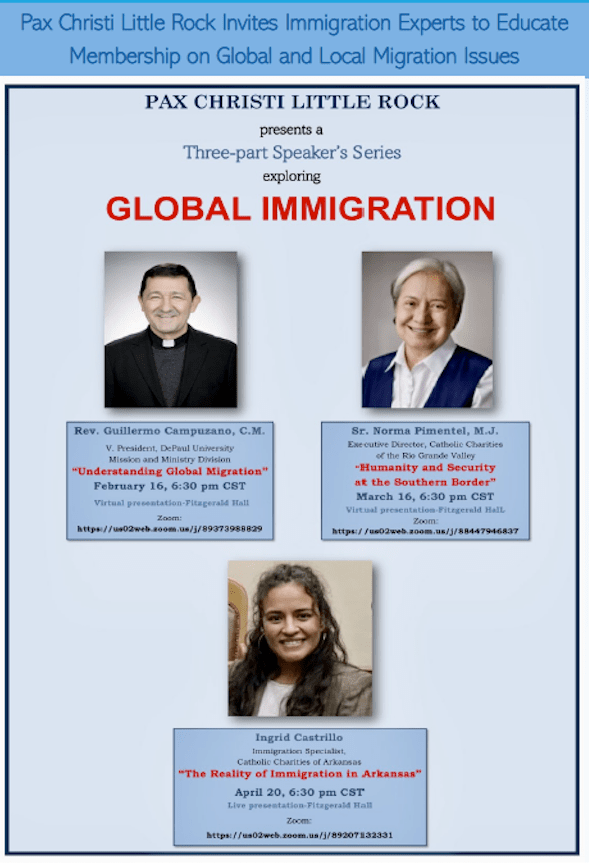
Eric Brown, the Executive Director of Seis Puentes
Join us for the second program of our series on immigration issues. Mr. Brown will provide information about his organization as well as discuss immigration issues across the state. Seis Puentes is a nonprofit based in North Little Rock that is dedicated to empowering Latino and immigrant families through education, culture, and community connection.
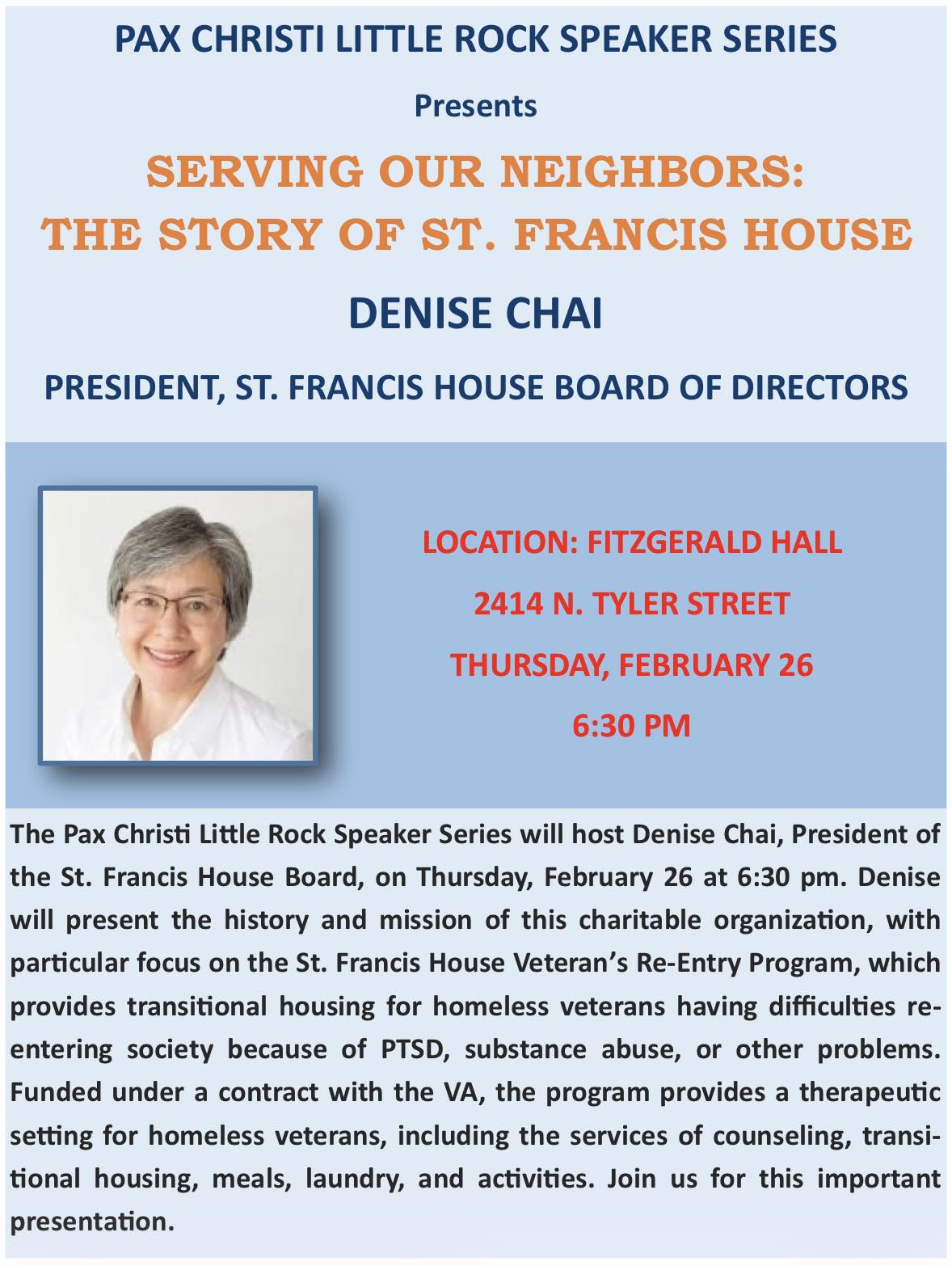
Last in a 3- part series on the history of the conflict in the Holy Land
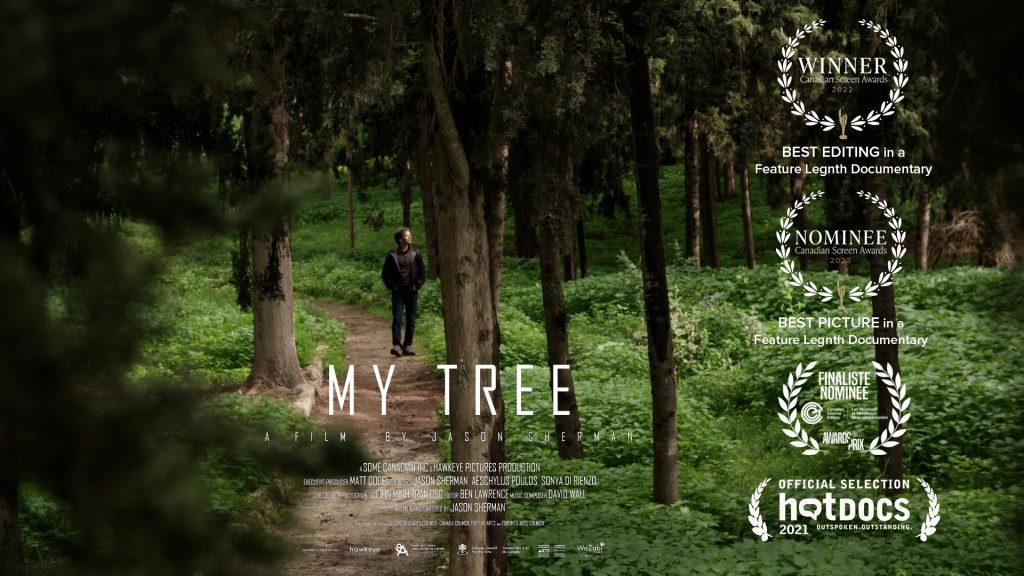
When: Thursday, October 19, 2023
Where: Live at St. John’s Catholic Center, Fitzgerald Hall, 2500 N. Tyler St. Little Rock, and via Zoom:
https://us06web.zoom.us/j/86729292246
Meeting ID: 867 2929 2246
A Brief History of the Origins of the Israeli-Palestinian Conflict – Pt. 2 of a 3-part series.

Film Presentation with commentary and Q & A session with a consulting producer.
When: Thursday, October 19, 2023
Where: Live at St. John’s Catholic Center, Fitzgerald Hall, 2500 N. Tyler St. Little Rock, and via Zoom:
https://us06web.zoom.us/j/86729292246
Meeting ID: 867 2929 2246
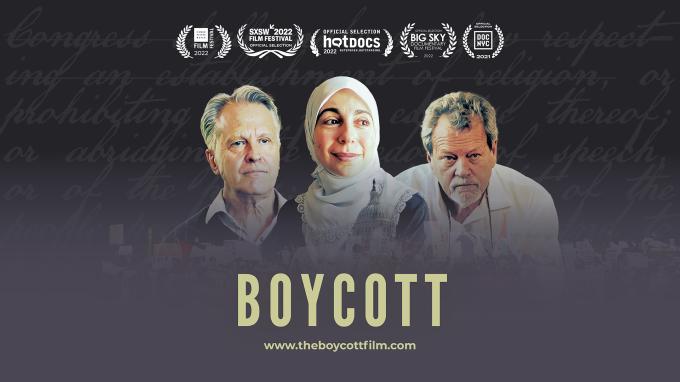
Film Presentation with commentary and Q & A session with a consulting producer.
When: Thursday, Sept 16, 2023
Where: Live at St. John’s Catholic Center, Fitzgerald Hall, 2500 N. Tyler St. Little Rock, and via Zoom: https://us06web.zoom.us/j/81830283186
Presented by representatives of the Diocesan Council for Black Catholics and Members of Pax Christi Little Rock Fr. Warren Harvey and Roz and Tim Pruitt.
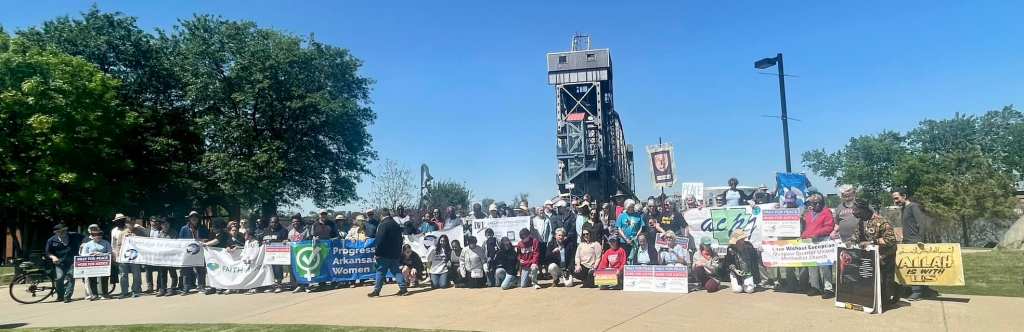
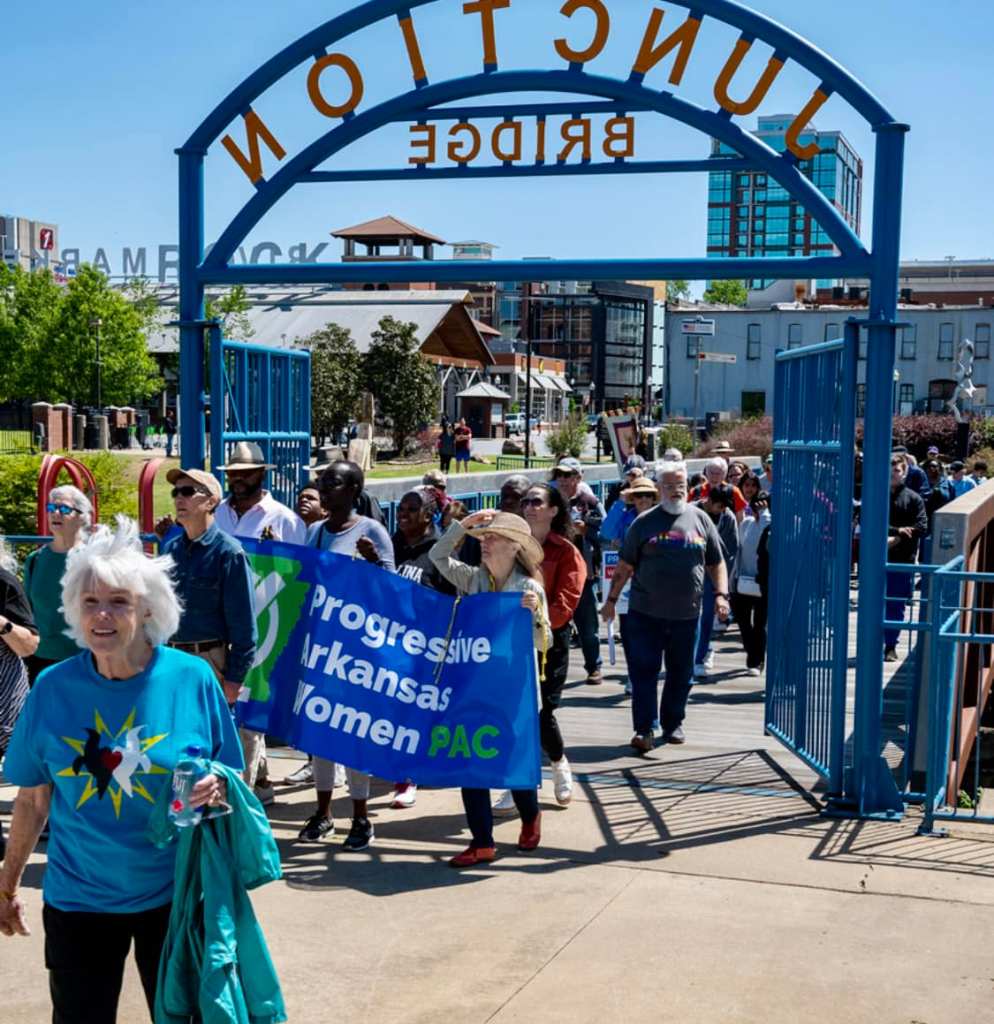

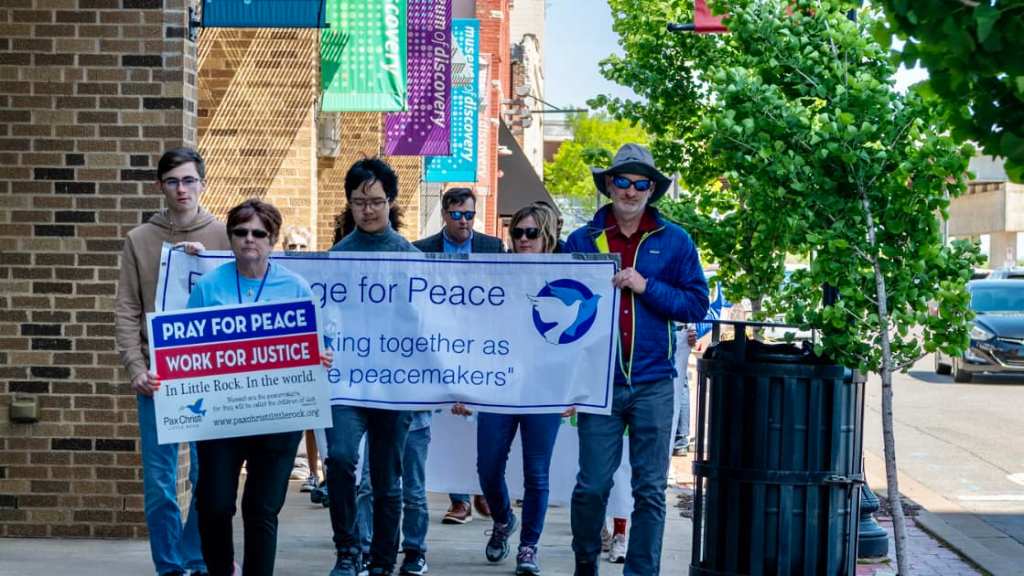
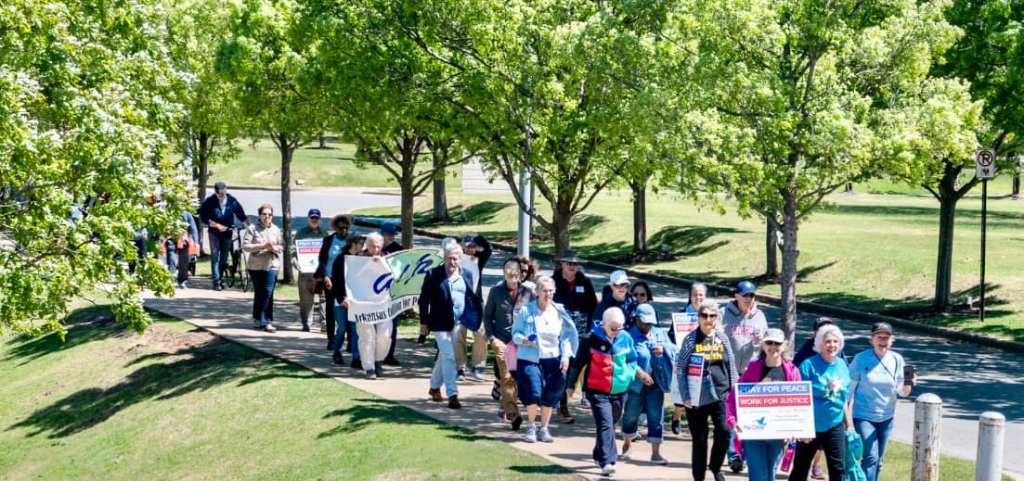
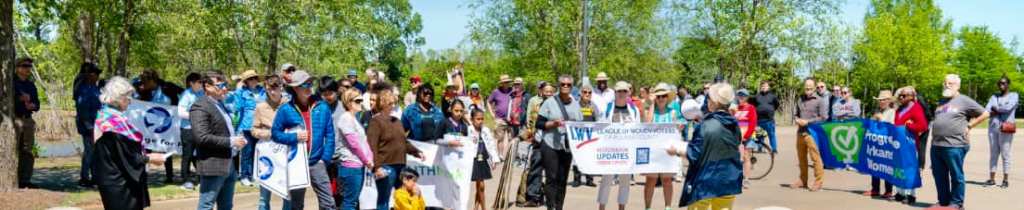
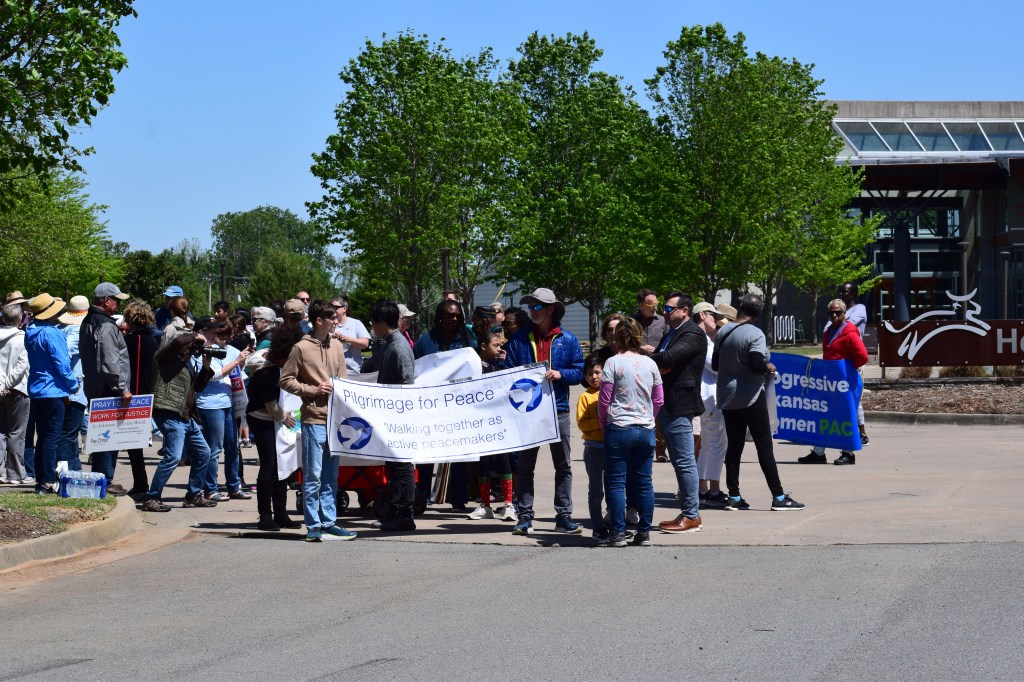
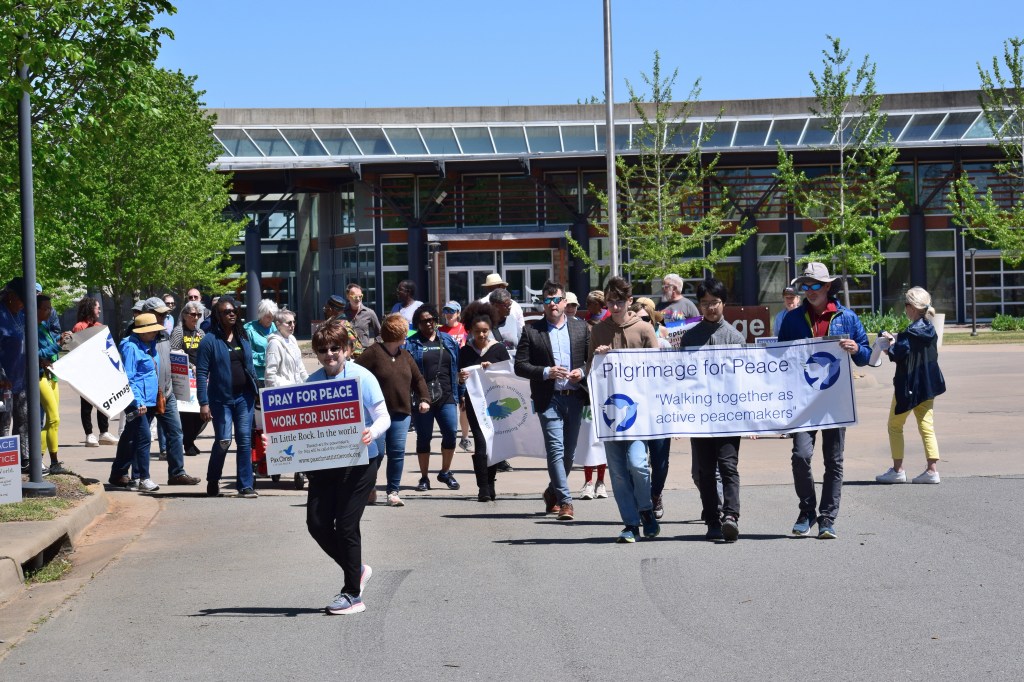




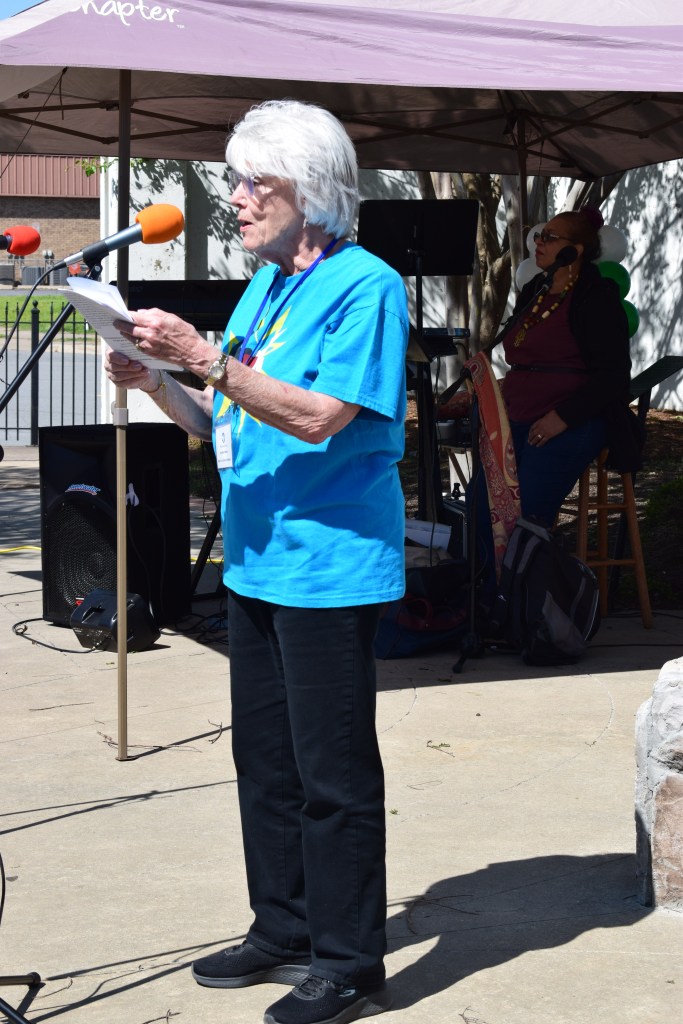
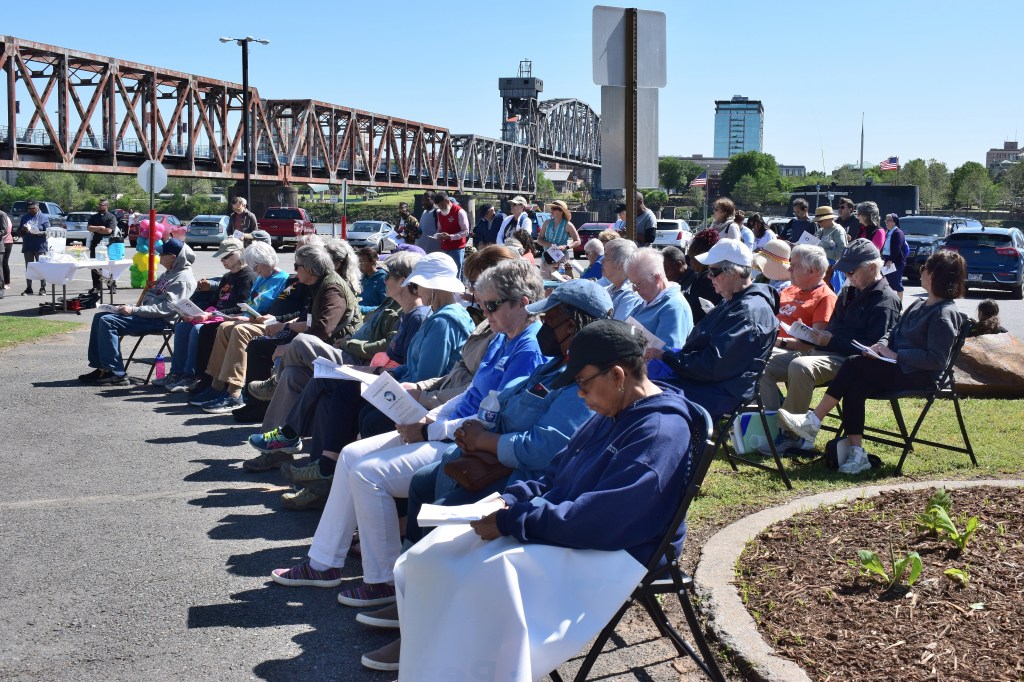
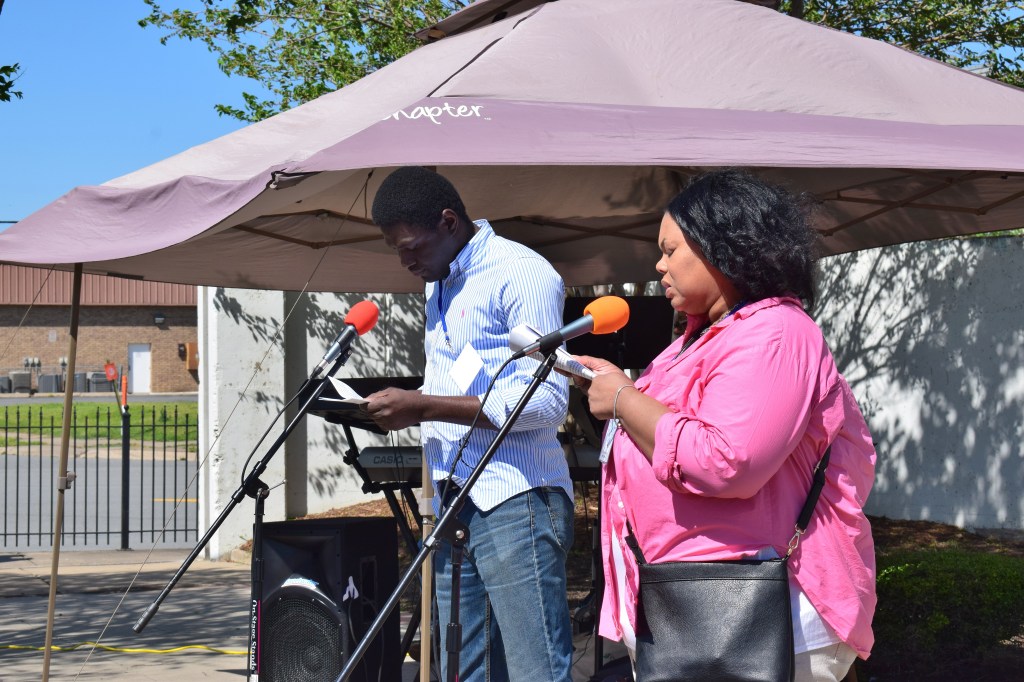
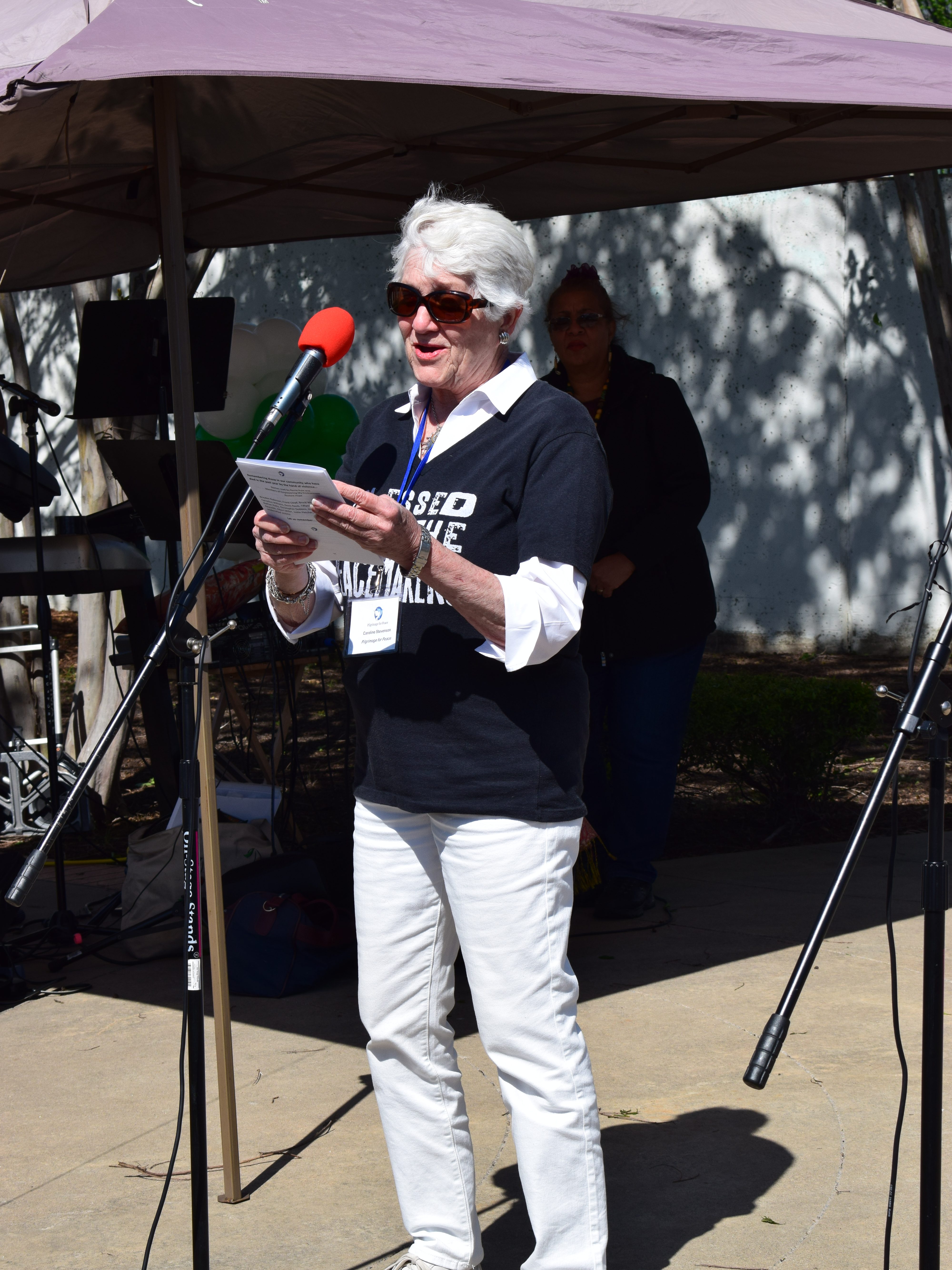

April and Glen talk with vice-president and board member of Pax Christi, Arkansas, psychologist Dr. Sherry Simon. Pax Christi is a Catholic organization devoted to the pursuit of peace. Sherry talks about the work Pax Christi does, how persons of various political views work together for the cause of peace, and how her knowledge and skills as a psychologist help her in this work. She discusses the active approach required in a pursuit of peace.
The podcast is in two parts, each of which you can access by clicking on the icons below:



Pax Christi Little Rock’s efforts to follow the model of prayer, study, and action since its founding is being feature on a retrospective video created by Pax Christi USA. Follow the links to the YouTube presentation.